
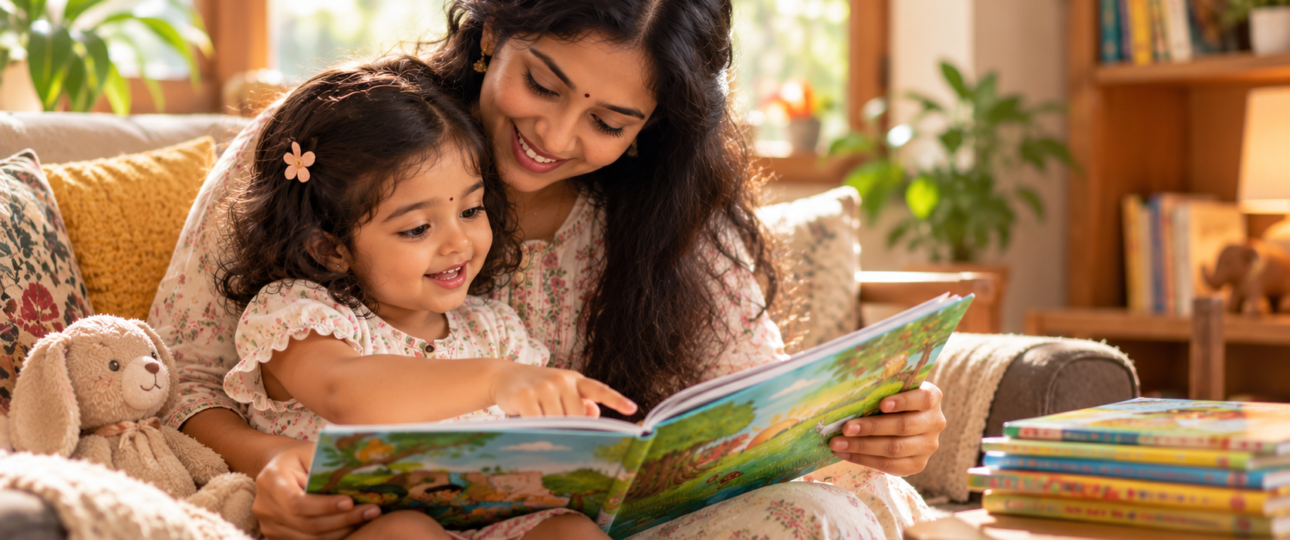
Long before a child can read a single word, they’re already learning to love — or fear — books. A first book isn’t just entertainment; it’s your child’s introduction to language, imagination, and the idea that stories are worth paying attention to.
What makes a good first book?
- Bright, expressive illustrations that tell half the story on their own, so even pre-readers can “read” the pictures
- Simple, rhythmic language — repetition and rhyme help toddlers predict what comes next, which builds confidence
- A relatable character or journey, so the child has an emotional anchor, not just facts to memorize
- Interactive elements (counting, matching, tracing) that turn passive listening into active participation
This is exactly why counting books like The Little Ducklings’ Counting Quest work so well — the child isn’t just hearing numbers, they’re following a duckling’s journey from 1 to 10, so the numbers become part of a story they care about.
A simple habit, a lasting outcome
Studies consistently show that children read to regularly before age 3 develop larger vocabularies and stronger early literacy skills by kindergarten. But the real goal isn’t early reading — it’s early love of reading. A child who associates books with warmth, laughter, and cuddling up with a parent will keep reaching for books long after the “learning” part is done.
Takeaway for parents: Don’t worry about “teaching” from the first book. Just read it the same way, at the same time, with the same warmth, and let the story do its quiet work.